


(English version below)
Gregori Fiorini is een Braziliaanse filmmaker, scenarist en audiovisueel producent uit Fortaleza, in de deelstaat Ceará. Hij behaalde een bachelor in Cinema en Audiovisuele Kunsten aan de Universidade de Fortaleza (UNIFOR) en is de oprichter van GF Production. Zijn parcours beweegt zich tussen fictie, documentaire en, meer recentelijk, animatie. Terugkerende thema’s in zijn werk zijn herinnering, ontheemding, identiteit, verbondenheid en de menselijke banden die standhouden wanneer mensen van plaats of tijd veranderen.
Tijdens zijn universitaire opleiding organiseerde hij ook filmprogramma’s rond filmmakers en werken die zijn relatie met cinema hebben gevormd. Daarbij kwamen onder meer Truffaut, Fellini, Almodóvar, The Godfather en Glauber Rocha aan bod. Die ervaringen met het samenstellen van filmprogramma’s en het bespreken van films hebben zijn blik als filmmaker mee gevormd.
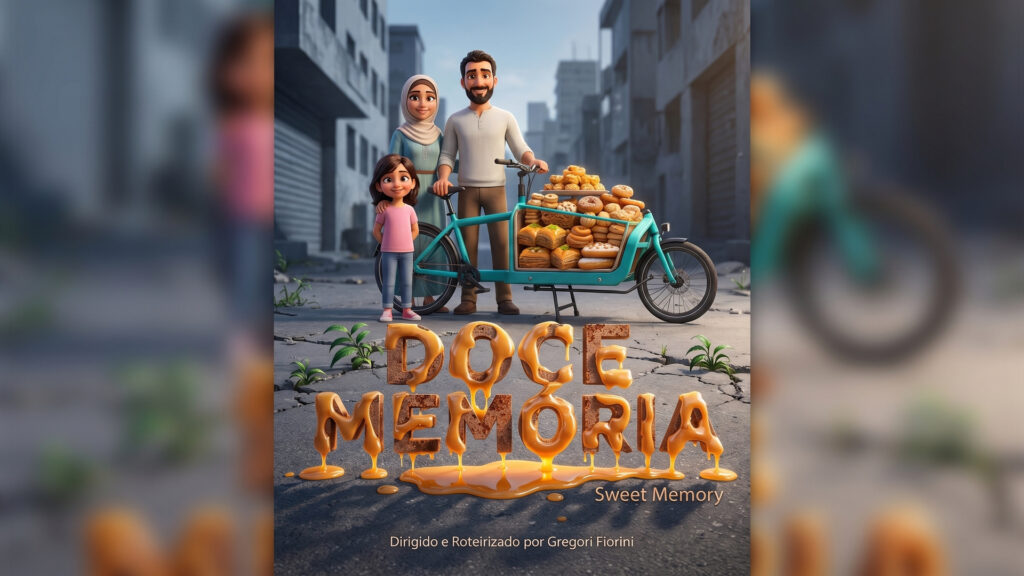
Zijn meest recente werk als regisseur en scenarist is Doce Memória (Sweet Memory, Brazilië, 2026, 6 min. 37 sec.), een korte animatiefilm over Yasmin, een Syrisch meisje dat samen met haar familie in Brazilië een nieuw leven opbouwt. De herinnering aan de ma’amoul die thuis wordt bereid, vormt een brug tussen haar kindertijd, culturele identiteit, herinneringen en het gevoel ergens thuis te horen. De film werd geselecteerd voor de animatiesectie van het 29ste Marano Ragazzi Spot Festival in Italië en leidde ook tot het educatieve initiatief Doce Memória nas Escolas (Sweet Memory op school).
De keuzes van Gregori Fiorini:
The Godfather (Francis Ford Coppola, 1972)
Ik keer steeds terug naar The Godfather vanwege de precisie waarmee een verhaal van enorme omvang in de eerste plaats een familiegeschiedenis blijft. Coppola bouwt een wereld van macht, geweld en morele verandering op rond intieme relaties, stiltes, loyaliteit en breuken. De film is voor mij een referentiepunt wat betreft de manier waarop de dramatische kracht van een film voortkomt uit de personages, nog voordat de omvang van het conflict een rol speelt.
Todo Sobre Mi Madre (Pedro Almodóvar, 1999)
Almodóvar slaagt erin melodrama, humor, verlies en genegenheid samen te brengen zonder zijn personages tot één enkele definitie te reduceren. Wat mij het meest aanspreekt, is de manier waarop de film pijn omzet in beweging en een idee van familie schetst dat verder reikt dan bloedverwantschap. Het is diep menselijke cinema die tegelijkertijd onmiddellijk herkenbaar is als het werk van een uitgesproken auteur.
Deus e o Diabo na Terra do Sol (Glauber Rocha, 1964)
Glauber Rocha heeft laten zien dat een Braziliaanse film kan vertrekken vanuit een zeer specifiek gebied en juist daardoor een universele dimensie kan bereiken. De sertão, het droge achterland van Brazilië, is niet zomaar een decor: het bepaalt mee de dramaturgie, de politiek, de filmtaal en het verbeeldingsuniversum van het werk. Voor mij onderstreept de film hoe belangrijk het is om te creëren vanuit de plek van waaruit je spreekt, zonder je eigen identiteit te proberen neutraliseren.
Les Quatre Cents Coups (François Truffaut, 1959)
Deze film raakt me in het bijzonder door de manier waarop hij naar de kindertijd kijkt zonder neerbuigend te worden. Antoine Doinel wordt benaderd als een volwaardig, tegenstrijdig en zich ontwikkelend individu, niet als een abstract idee van een ‘kind’. Die eerlijkheid in de manier waarop de film het perspectief van een kind benadert, vind ik bijzonder belangrijk wanneer cinema moeilijke ervaringen vertelt vanuit het standpunt van een jonge protagonist.
8½ (Federico Fellini, 1963)
8½ brengt herinneringen, verbeelding, verlangen, onzekerheid en creativiteit samen tot één cinematografisch geheel. Ik waardeer vooral hoe Fellini aanvaardt dat het creatieve proces tegenstrijdig, gefragmenteerd en zelfs chaotisch kan zijn, zonder dat dit ten koste gaat van de artistieke precisie. De film herinnert me eraan dat wat op het eerste gezicht een creatieve crisis lijkt, soms juist kan uitgroeien tot een eigen filmtaal.
English version:
Gregori Fiorini is a Brazilian filmmaker, screenwriter and audiovisual producer from Fortaleza, in the state of Ceará. He holds a bachelor’s degree in Film and Audiovisual Arts from the University of Fortaleza (UNIFOR) and is the founder of GF Production. His work spans fiction, documentary and, more recently, animation. Recurring themes in his work include memory, displacement, identity, belonging and the human bonds that endure as people move across places and through time.
During his university studies, he also organised film programmes dedicated to filmmakers and works that have shaped his relationship with cinema. These included retrospectives of Truffaut, Fellini, Almodóvar, The Godfather and Glauber Rocha. These experiences in curating and discussing films helped shape his perspective as a filmmaker.
His most recent work as a director and screenwriter is Doce Memória (Sweet Memory, Brazil, 2026, 6 min 37 sec), an animated short film about Yasmin, a Syrian girl who rebuilds her life in Brazil alongside her family. The memory of the ma’amoul prepared at home serves as a bridge between her childhood, cultural identity, memory and sense of belonging. The film was selected for the Animation section of the 29th Marano Ragazzi Spot Festival in Italy and also inspired the educational initiative Doce Memória nas Escolas (Sweet Memory in Schools).
Gregori Fiorini’s Choices:
The Godfather (Francis Ford Coppola, 1972)
I keep returning to The Godfather because of the precision with which a story of enormous scope remains, above all, a family saga. Coppola builds a world of power, violence and moral transformation around intimate relationships, silences, loyalties and ruptures. For me, the film is a point of reference for the way a film’s dramatic power emerges from its characters before it emerges from the scale of the conflict.
Todo sobre mi madre (Pedro Almodóvar, 1999)
Almodóvar manages to bring together melodrama, humour, loss and affection without reducing his characters to a single definition. What interests me most is the way the film transforms pain into movement and presents an idea of family that extends beyond blood ties. It is profoundly human cinema that is also immediately recognisable as the work of a distinctive auteur.
Deus e o Diabo na Terra do Sol (Glauber Rocha, 1964)
Glauber Rocha demonstrated that a Brazilian film can start from a very specific region and, precisely because of that, achieve a universal dimension. The sertão, Brazil’s arid hinterland, is not merely a backdrop: it helps shape the film’s dramaturgy, politics, cinematic language and imaginative universe. For me, the film underscores the importance of creating from the place one speaks from, without attempting to neutralise one’s own identity.
Les Quatre Cents Coups (François Truffaut, 1959)
This film particularly resonates with me because of the way it portrays childhood without condescension. Antoine Doinel is treated as a fully fledged, contradictory and evolving individual, rather than as an abstract idea of a ‘child’. I consider this honesty in approaching a child’s perspective especially important when cinema explores difficult experiences through the eyes of a young protagonist.
8½ (Federico Fellini, 1963)
8½ brings memory, imagination, desire, insecurity and creativity together into a single cinematic whole. I particularly appreciate the way Fellini embraces the idea that the creative process can be contradictory, fragmented and even chaotic without compromising artistic rigour. The film reminds me that what initially appears to be a creative crisis can sometimes evolve into a cinematic language of its own.
De Keuze van Gregori Fiorini